The first quote arrives and it looks like a reasonable total. Professional services. The coffin. The vehicle. What it does not mention is the grave plot, because that comes from the cemetery, not the funeral director. Or the digging fee, which is a separate charge from the burial authority. Or the headstone, which is a different transaction again, on a different timeline, with rules attached that nobody has explained yet.
By the time most families have the complete picture of what a burial costs, they are weeks into the arrangements. The decisions are already made.
This is not deliberate. Burial costs are fragmented across several different organisations, none of which are coordinating what you know or do not know yet. The gap is filled by whoever is sitting with you in the arrangement meeting. What follows covers every cost involved in a burial service, what figure to expect, and where each charge actually comes from.
How much Does a Burial Cost in the UK?
According to SunLife’s Cost of Dying report, the average UK funeral cost passed £4,000. That figure covers what the funeral director provides. A burial adds costs that sit entirely outside it, and they are not small.
Where you are in the country makes a considerable difference. Burial plot rights in London and the South East can exceed £5,000 in some municipal cemeteries, and that is before a coffin has been chosen. In the North West the same rights typically sit between £800 and £2,500. These are local authority rates. The funeral director does not set them. Add the digging fee, the headstone, and the professional services, and a complete burial in the UK can reach anywhere from £5,000 to over £12,000. Location drives that range more than any other single factor.
What Are Grave Plot Rights and Do You Own the Plot?
No. Paying for a grave plot means paying for exclusive rights to that plot for a fixed period, typically between 25 and 100 years depending on the cemetery and the local authority. You are not buying the land. The land stays with the cemetery. After the rights period ends, the plot can revert to the cemetery unless the rights are renewed, and renewal fees apply.
This surprises families, and understandably so. The language of “buying a grave” implies permanent ownership. The reality is a long-term lease, and it matters particularly for families who intend for the same grave to hold more than one person. A standard grave can accommodate two or sometimes three burials depending on depth. If that is the plan, the lease needs to be long enough to outlast the need.
Church of England churchyards operate differently. The plot is allocated by the parish, not purchased outright, and the rules on what you can place on a grave are stricter than most families expect. A headstone that would be approved without question at a municipal cemetery may be refused because the stone is the wrong colour or the inscription does not meet diocesan guidelines. Popular churchyards across much of the UK also have limited space remaining. If a specific churchyard mattered to the person who died, confirm with the parish directly before any arrangements go further.
Worth knowing
Grave plot rights have an expiry date, and inherited plots are often closer to that date than families realise. If you are arranging a burial in an existing family grave, ask for the rights documentation first. A plot whose rights lapsed years ago is not something that can be resolved quickly, and it affects everything else.
Why Is There a Separate Digging Fee?
The digging fee is charged by the cemetery or the church, not by the funeral director. It is a direct charge from the burial authority, always appears as its own line item, and is passed through by the funeral director at cost. In most UK cemeteries this sits between £300 and £900, though in London and the South East the figure is regularly higher.
Reopening an established grave for a second burial typically costs more than a new one, because of the additional excavation involved. Families who see the digging fee appear as a separate line item sometimes assume the funeral director has added something that was not in the original quote. They have not. The charge goes to the cemetery. A funeral director who does not mention it upfront is not necessarily hiding it, but they are leaving you to find out later, and later is the wrong time.
What Are the Rules on Headstones and Memorials
Every cemetery sets its own rules, and they are not interchangeable. A municipal cemetery will specify the permitted stone types, the maximum height, and what inscriptions pass. Church of England churchyards layer the Church’s national guidelines on top of local rules, covering approved stone colours, permitted shapes, and wording. The diocese gets final say, and parishes can add further restrictions beyond that.
Rejected headstones are more common than the funeral industry tends to acknowledge. A stonemason makes a memorial to order. Nobody checked the cemetery’s specific rules first. The family receives a refusal weeks later while still in the middle of grief. Ask for the rules in writing before any stonemason is contacted. Not after. If your funeral director does not volunteer this, that is itself something worth knowing about them.
How Long Does a Headstone Take After the Burial?
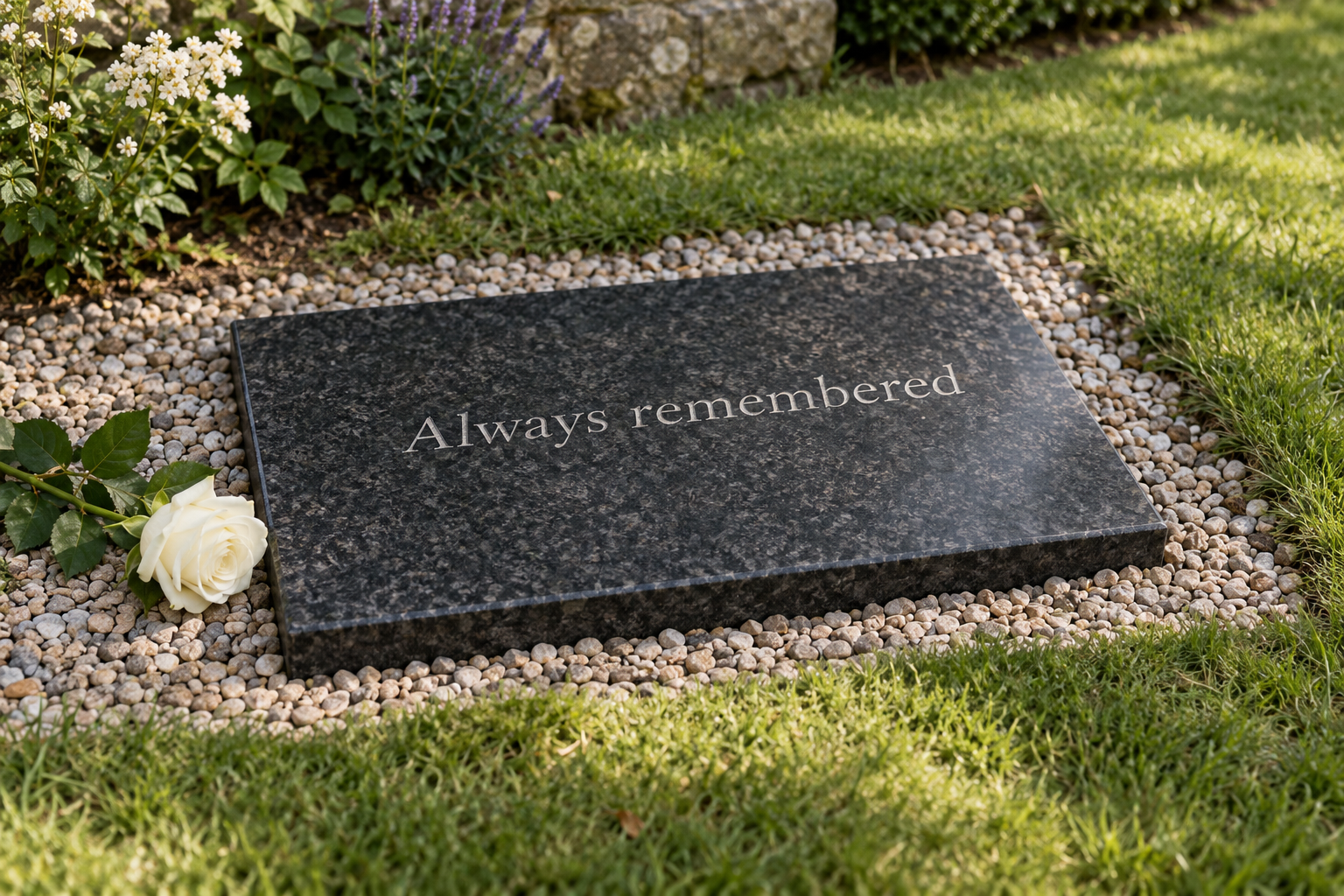
Most families assume a headstone follows a burial within a few weeks. The actual minimum is three to six months. For a new grave, most UK cemeteries require the ground to compact before a headstone foundation is safe to lay, and that settlement period can run to twelve months before installation is permitted.
This is not something most funeral directors raise unless you ask. The grave will be unmarked for a considerable stretch. Visiting in those months and finding no marker is its own kind of grief on top of grief. Most cemeteries allow a temporary wooden cross or a simple name plate in the interim. Ask about this before the burial, not after you have driven to the cemetery on a cold morning and found nothing there.
Are burial costs more expensive than cremation?
Yes. By a meaningful margin. The plot rights alone can exceed the entire cost of a cremation in parts of the UK. The digging fee and headstone sit on top of that. For families where money is not the deciding factor, this changes nothing. For families where it is one of the real considerations, not knowing the figure in advance takes the decision away from them.
This is the conversation most funeral directors avoid having early. Cost feels uncomfortable. But a family that chooses burial without knowing the full figure, and then discovers it after committing, has not made a free choice. They have been managed.
The difference between burial or cremation in cost terms is a conversation worth having before anything is agreed. Not to steer you toward the cheaper option. To make sure the choice you make is one you actually made. Our pricing page provides clear, transparent information about our services, so you can understand the costs involved and make an informed decision with confidence.
What Hope Funeral Care Does Differently
Hope Funeral Care is an independent funeral director. Every family we work with speaks directly to the people who will carry out the funeral. There is no call centre, no script, and no pressure to decide quickly.
Every quote we provide covers everything we know about. That includes our professional fees, the cemetery costs, the plot rights, the digging fee, and an honest conversation about headstones, including the rules, the lead times, and what it will realistically cost. We do not wait to be asked. We raise it all at the start because that is when it is useful, not after arrangements have already been confirmed.
Burial costs being unclear is an industry problem, not an inevitable one. Whether you are arranging a funeral now, or thinking about your own funeral planning in advance, we will take you through every figure clearly and give you the time you need to understand it. That is what independent funeral care should mean.
If you have questions about burial costs or want to talk through arrangements, we are here. Contact us today on 01704 616448 or email [email protected] for expert advice and compassionate guidance.