A memorial stone rarely gets chosen the way people expect it to. Most families walk into that decision assuming price comes down to size alone, then discover the cost of memorial stones actually depends on a handful of separate choices stacking on top of each other, material, lettering, installation, and whatever the cemetery will and won’t allow. None of it is arbitrary. Once you know what’s actually driving the price, choosing the right memorial stone gets a lot less overwhelming.
What Is a Memorial Stone?
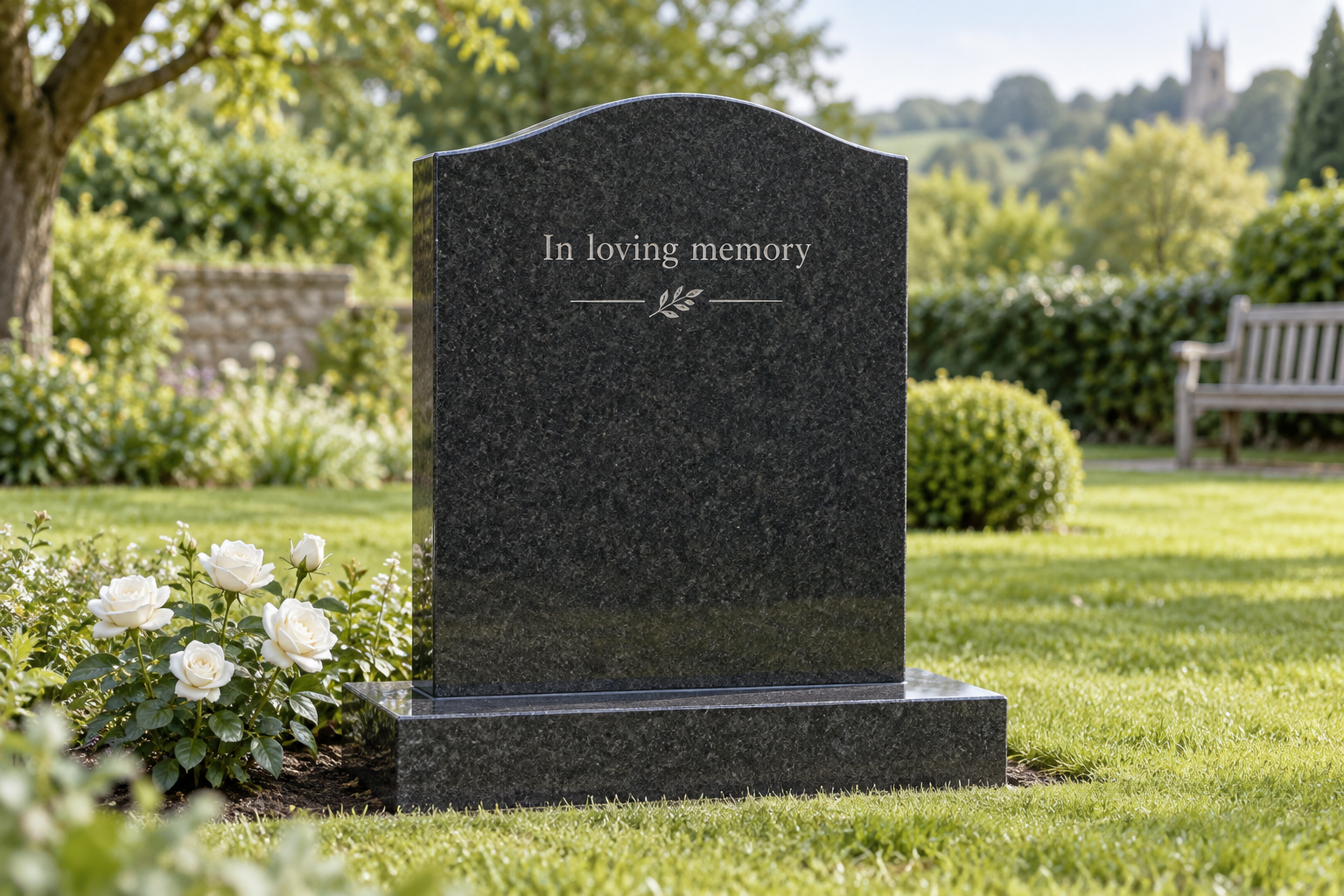
A memorial stone is a lasting marker placed at a grave or in a memorial garden, built to hold a name, dates and often a personal inscription that says something true about the person it’s for. Some are traditional upright headstones. Others sit flat against the grass as a grave marker, sit lower still as a plaque, or frame the whole grave space as a kerb set. What they share is the job of giving a family somewhere to visit, and giving a life a mark that outlasts the funeral itself.
The Material You Choose
Material is usually where the biggest swing in the cost of memorial stones happens, and each option comes with real trade-offs rather than just a price tag.
Granite is the most common choice for good reason. It’s dense, weather resistant, and holds an inscription sharply for decades with very little upkeep, which is exactly why most cemeteries accept it without hesitation.
Marble looks striking when it’s new, pale and softly veined, but it’s a softer stone than granite and weathers faster outdoors, especially somewhere as exposed to rain as the UK.
Limestone sits in the middle, more affordable than granite, workable into detailed carving, though it erodes noticeably over a few decades and some cemeteries restrict it for exactly that reason.
Sandstone has the most character of the common choices and the shortest lifespan, softening and losing inscription clarity faster than the others, which is why it’s chosen more for personality than permanence.
The Size and Shape of the Memorial
A full upright headstone costs more than a flat lawn tablet, and a flat tablet costs more than a small plaque, simply because of how much material and labour each one takes. Small memorial stones for graves, low flat markers or modest plaques rather than tall upright designs, have become genuinely popular for a reason beyond budget. Plenty of cemeteries now require them specifically, since flat memorials make mowing and maintenance easier across a large site. Kerb sets, which frame the entire grave space, sit at the expensive end of the scale and have become less common as a result, though families who want that fuller tribute still choose them.
Engraving and Personalisation
Gravestone engraving is usually priced per letter, and it adds up faster than people expect once a full name, dates and a message are all accounted for. Many stonemasons include a set number of letters free with the stone itself, often somewhere around eighty, with anything beyond that charged individually. Painted or gilded lettering costs more again than plain engraved text, since it’s a separate process on top of the carving. A short, simple inscription keeps this cost modest. A longer personal message, a verse, a name in a second language, additional symbols, pushes it up noticeably.
How Much Does a Gravestone Cost?
A standard upright granite headstone in the UK typically runs from around £1,000 to £2,500, inscription and installation included. Marble sits in a similar range, sometimes slightly higher for the best quality finishes. Flat lawn tablets and simpler grave markers start considerably lower, often from around £800. Bespoke kerb sets or larger designs can exceed £5,000 once every feature is added in. There’s no single answer to how much does a gravestone cost, because the honest answer always depends on material, size and how much personalisation goes into it.
Installation Costs
Installation typically runs separately from the stone itself, usually somewhere between £100 and £500 depending on ground conditions and what the specific cemetery requires. Some councils charge their own permit fee on top of that, generally in the region of £100 to £300, and a handful require an engineer to verify the foundation after installation, adding a further cost. None of this is optional or something a family can skip to save money, since an improperly installed memorial stone is both a safety issue and something most cemeteries won’t allow to stand unaddressed.
Cemetery and Churchyard Regulations
No two cemeteries run to the same rulebook. A municipal site fixes its own list of permitted stone types, a maximum height, and what wording actually passes review. Church of England churchyards work differently again, with the Church’s national guidelines sitting on top of whatever the parish adds locally, covering colour, shape and wording, and the diocese gets the final say regardless of what anyone else agrees to. Rejected memorials happen constantly. Not because families choose badly, but because nobody checked the actual rules before a stonemason started cutting stone. Then there’s the part almost nobody expects going in. Ground needs to settle before a headstone foundation is safe, three to six months at minimum, sometimes stretching toward a year on a newer grave, a timing question covered in more depth in Hope Funeral Care’s own guide to burial costs explained.
Additional Features That Increase the Cost
Photographs, ceramic or laser etched, add a noticeable amount to the base price. Religious symbols, decorative carving, or a bespoke shape rather than a standard design all push the cost of memorial stones higher too. Vases, kerbside additions and gilded lettering are common extras families add once the core stone is decided. None of these are necessary. They’re personal choices that make a memorial feel more specific to the person it’s for, and it’s worth deciding early which of them actually matter enough to pay for.
How to Choose the Right Memorial Stone for Your Budget
Start with what the cemetery actually allows, since that narrows the decision before cost even comes into it. From there, granite tends to offer the most durability for the money, while a flat marker or simple plaque keeps costs down without making the tribute feel any less genuine. Keep the inscription focused rather than exhaustive if the budget’s tight, since every extra letter adds up. A memorial stone doesn’t need every available feature to do its job properly. It needs to say something true, hold up outdoors for decades, and fit within what a family can actually afford without adding financial strain on top of grief.
Choosing a memorial stone shouldn’t mean guessing at costs or discovering a cemetery’s rules after a design’s already been ordered. Hope Funeral Care’s memorial stones service in Southport guides families through material, size and cemetery regulations from the start, alongside the wider funeral services Hope provides. Get in touch to talk through what a fitting memorial actually costs for your specific situation.